My Blog List


Popular Posts
-
Why is the guest book, so important for a wedding? Why is it important for the wedding couple? Guest books are important for the couple, be...
-
you want to buy Polaroid CIM-1237R 12 MP Digital Camera with 3x Optical Zoom, Red,yes ..! you comes at the right place. you can get special ...
-
Need some extra space in your kitchen, because your cupboards full of canned goods, pots and pans, and everything else you use to cook with...
-
Growing your business is how you succeed. Let's face it, very few people run their business, and do not care at all about the money. Al...
-
"smart growth", ie, densification of development in new and established communities, especially along transportation corridors, n...
-
One of the great things about proposing marriage is the fun you have come with a creative place to pop the question. If you live in Califor...
-
Translating... 1 Do not be fooled by a digital camera pixel counts small point and shoot cameras are the number of pixels of the war year...
-
sizcache = "0" sizset = "48"> sizcache = "0" sizset = "48 ">... Choose your character can b...
-
you want to buy GE Power Pro X500-WH 16 MP with 15 x Optical Zoom Digital Camera, White,yes ..! you comes at the right place. you can get sp...
-
sizcache = "0" sizset = "44"> If you want to buy a DSLR camera this year, maybe you can add the Canon EOS Rebel T3i...


 Learn About Digital Photography - Take Better Digital Landscape Images

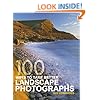
Want to add a landscape picture to your portfolio? Here are some suggestions on how to improve your landscape.
Perhaps the best time for taking dramatic photos of the landscape was at dawn or at dusk. So, sleep is not one of convenience for the serious landscape photographers.
to learn more about digital photography, the more you realize how important. It is much more than shows and recording. And time is part of the process.
If you ever attend the workshop, the first thing the instructor will tell you that, in order to better images, you need to to shoot at the right time . This is before 4:00 or after 9:00 to a good light. In the central part of the day, there is simply too light for the camera's image sensor to lunch without losing valuable information pixels. There is just something special about the light in those really early or late times makes your images much more pleasant to look at.
In addition to those hours during which you will get a "sweet light", there are other times when the colors and lighting really stand out. One of those times was before the storm . If the storm-Brewin ', go out with your camera and tripod, because the colors really "pop" during the upcoming storm. However, if the lightning is associated with the clouds, be very careful.
You will also want to have the right equipment, on hand to take better landscape photos. Equipment for landscapes will include camera and tripod, of course. You will want to put the widest lens on your camera. Lenses as wide as 12mm or 18mm will work best for these types of images. However, if your widest lens is 24mm, do not let that stop you.
One other piece of equipment that may be useful a neutral density filter. job this filter is to close the gap in the range of light your camera captures. Basically, it means to be part of the image that is shaded to reduce the brightest area, so that pixel information is not lost. The truth is that no image sensor in existence that can be seen the same dynamic range of light that the human eye can detect, so we can trick the sensor.
If you do not have a neutral density filter, you can do essentially the same thing for taking more than one shot of the same scene using something called "bracketing" . This is where you allow more or less light into the camera or change the shutter speed or aperture. After that, the images and combine them with software for editing photos, getting something called HDR (high dynamic range) images. It is a technique used by many advanced hobbyists and professionals, but it is not difficult with the right software. Yes, using image editing software is just one more thing you need to learn about digital photography.
Still another technique you can put in your bag of tricks is to use panorama landscape. To do this, set the camera on a sturdy tripod is level. Take a series of two or more images that would later combine into your image editing software, so you need to show the entire horizon in a picture. It is very dramatic techniques.
Bravo Landscapes joy to watch, whether it's mountains, valleys, plains, or cityscapes. Using the proper technique will be much ooh aah's from fans and friends.
0 comments:
Post a Comment